
What Is Community Wealth Building? A Simple Guide for Regular Families (Not Policy People)
- Carl Johnson

- Dec 21, 2025
- 7 min read
You know that feeling when you spend money at the local coffee shop and somehow it just feels... different? Like your dollars are doing more than just buying you a latte? That's because they are. And that difference: that's the heart of community wealth building, even if we never called it that before.
We've been thinking about this a lot at Storehouse Grocers because we see it every day. Families choosing where to spend their grocery money. Small business owners deciding who to hire. Communities wondering why their neighborhoods keep struggling even when there's plenty of money flowing through them. The answer isn't more complicated economic policies that regular people can't understand or influence. It's actually pretty simple: keep the wealth where the people are.
What Community Wealth Building Actually Means (Without the Jargon)
Community wealth building is really just a fancy way of saying "let's make sure the money and opportunities in our neighborhood actually stay here to help our neighbors." Instead of watching our dollars disappear into the pockets of distant shareholders who've never walked our streets, we're talking about creating systems where wealth circulates locally, creating good jobs, affordable housing, and thriving businesses that we actually have a say in.
Think about it this way: when you shop at a chain grocery store, where does that profit go? Corporate headquarters somewhere far away. When you bank with a big national bank, where do your savings get invested? Probably not in your neighbor's small business or your friend's home loan. When the big hospital or university in your area makes purchasing decisions, are they thinking about local suppliers and workers? Usually not.
But what if they were? What if all these major institutions: what people call "anchor institutions" because they're not going anywhere: what if they made decisions that prioritized keeping wealth in our communities instead of extracting it?
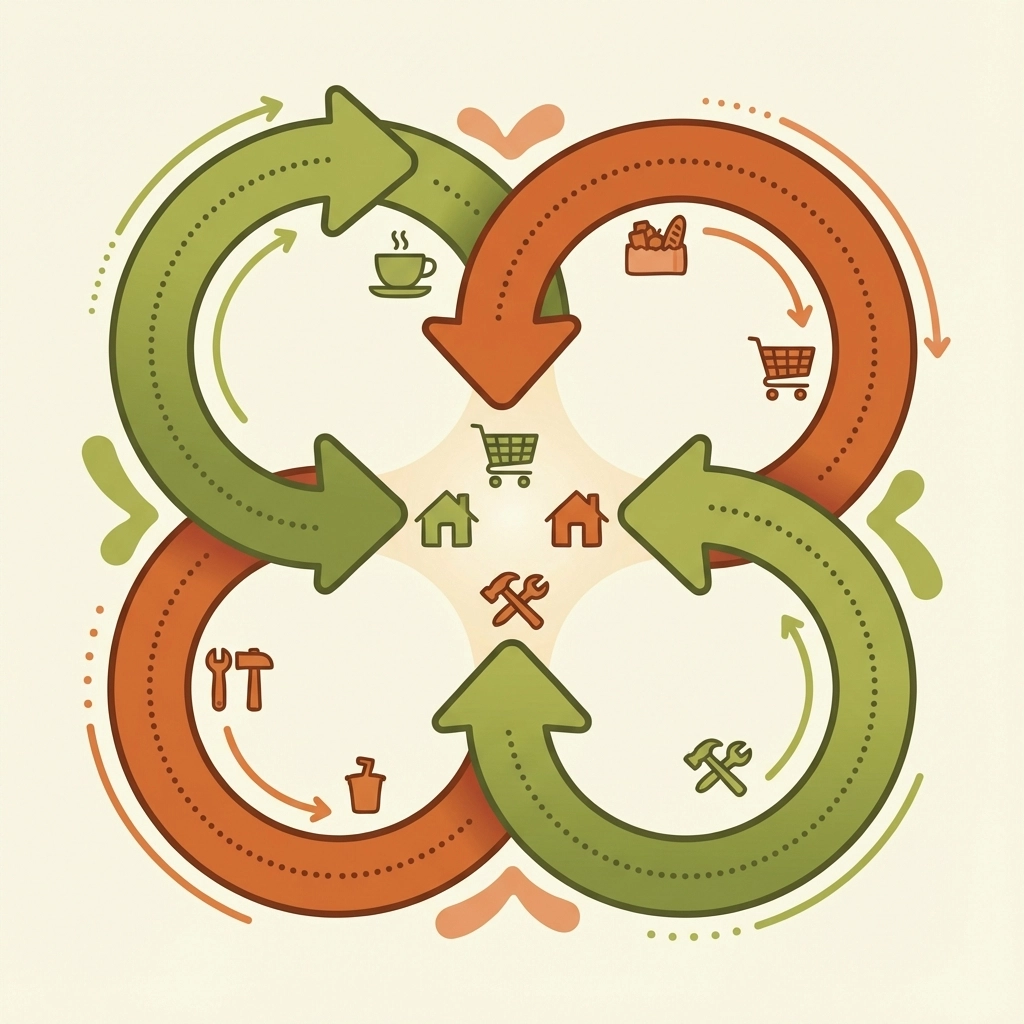
This isn't about being anti-business or anti-growth. We're pro-business: just pro-business that actually builds community wealth instead of extracting it. We're talking about cooperatives where workers share in the profits. Credit unions that invest your savings locally. Local hiring programs that create pathways for neighborhood families. Community land trusts that keep housing affordable. These aren't radical ideas: they're practical solutions that work when communities decide to try them.
Real Examples That Make Sense
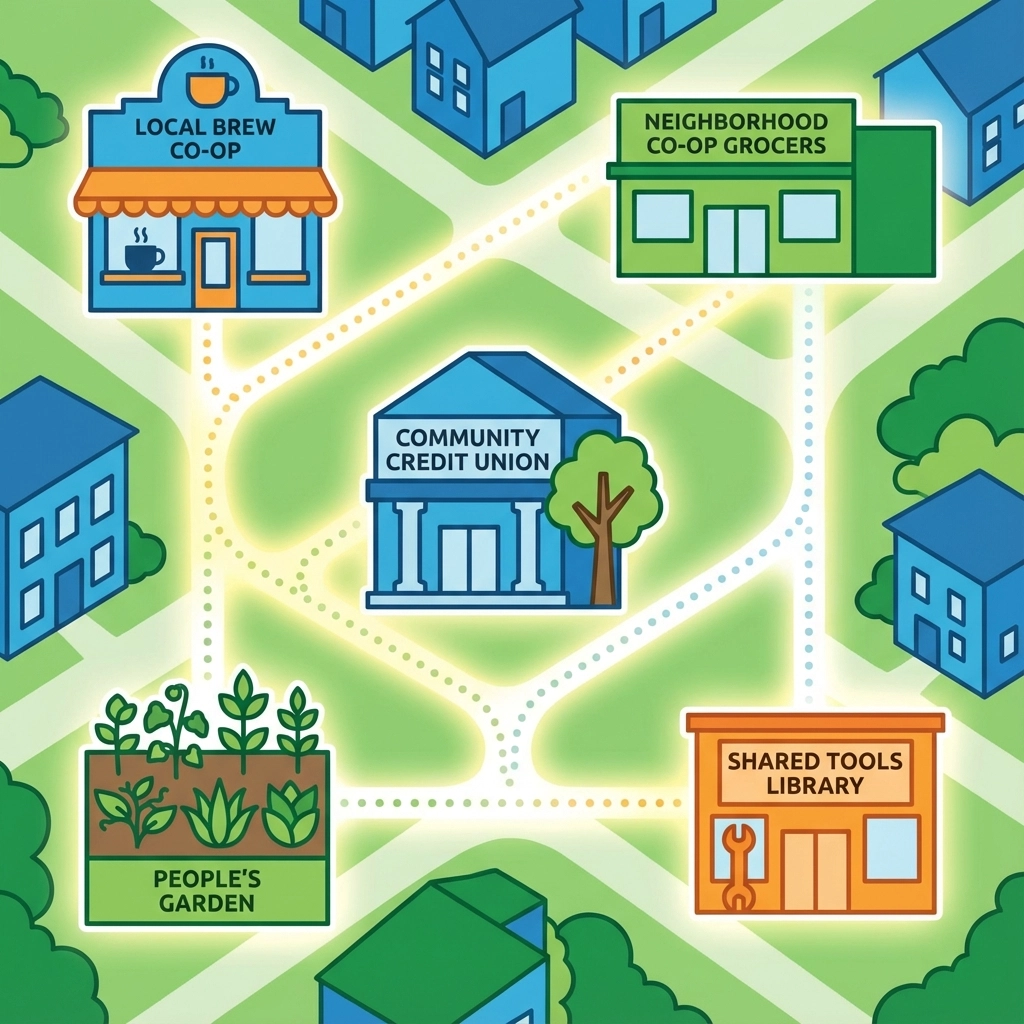
Let's get concrete about what building local economies actually looks like in practice. At Storehouse Grocers, we've seen how this works firsthand. When we source products from local farmers and producers, that money stays local. When we hire from the neighborhood, those paychecks get spent at other local businesses. When we partner with community organizations, we're strengthening the whole ecosystem.
But it goes way beyond groceries. Community wealth building shows up in coffee shops that become worker cooperatives, where the baristas actually own part of the business instead of just working for someone else's profit. It shows up in community-supported agriculture programs where families buy shares of local farms at the beginning of the season, providing farmers with upfront capital and families with fresh produce all year long.
It shows up in community development financial institutions, basically credit unions and loan funds that actually understand the neighborhood and are willing to lend to local businesses that big banks won't touch. It shows up in shared ownership models for everything from community kitchens to tool libraries to childcare cooperatives.
The storytelling for social change piece is huge here because we need to shift the narrative from "individual success" to "community success." Instead of celebrating the person who "made it out" of the neighborhood, we celebrate the people who are making the neighborhood stronger. Instead of seeing local businesses as "small" or "limited," we see them as the building blocks of community resilience.
Justice-Centered Entrepreneurship That Actually Works
Here's where justice-centered entrepreneurship comes in: we're not talking about charity or handouts. We're talking about changing who owns what and who benefits from economic development. When a family starts a business, do they have access to the capital, networks, and support they need to succeed? When neighborhoods gentrify, do longtime residents benefit from increased property values or get displaced by them?
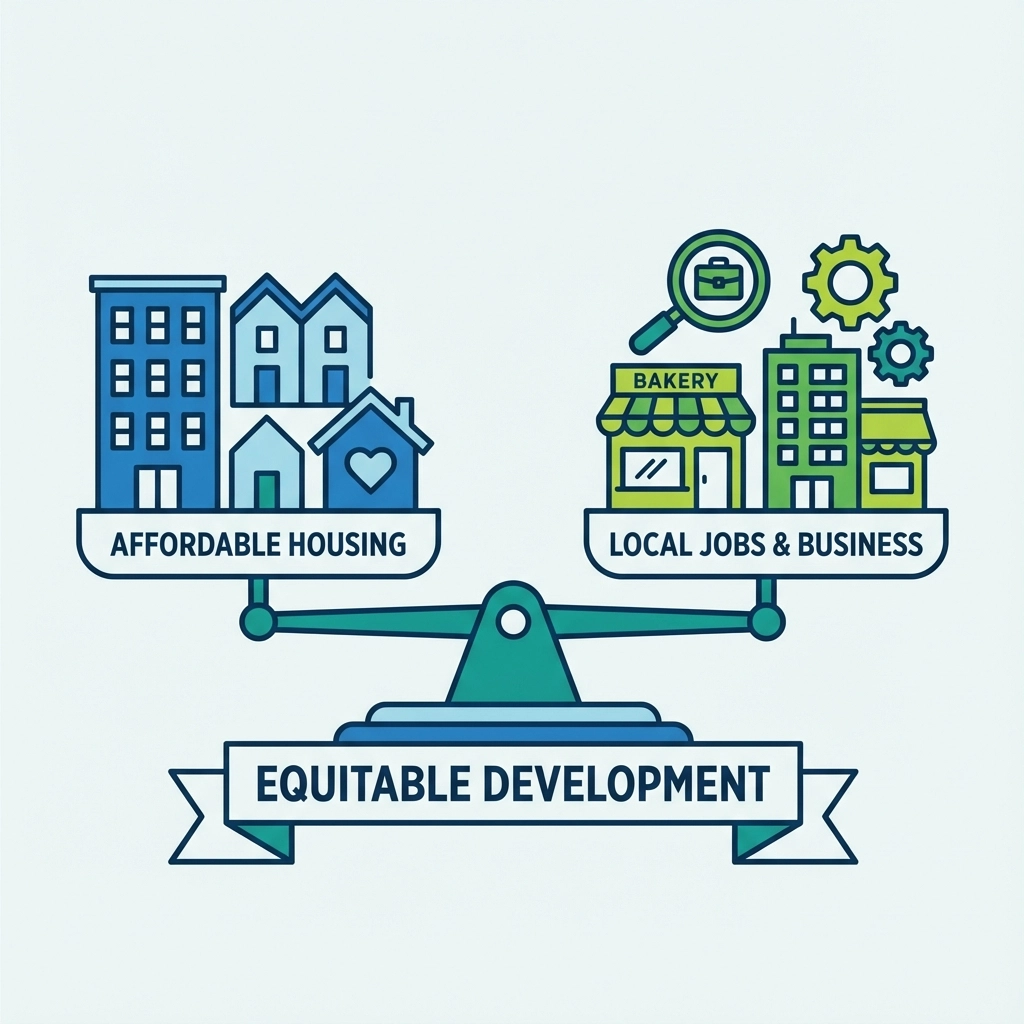
Community wealth building asks these questions and then does something about the answers. It means creating business incubator programs that prioritize entrepreneurs from the community. It means structuring development projects so that local residents can actually afford to shop at the new businesses and live in the new housing. It means ensuring that when neighborhoods improve, the people who've been there all along get to benefit instead of getting pushed out.
We've seen this work. Communities that prioritize local ownership and cooperative economics build wealth that stays put. They create good jobs for people without college degrees. They develop innovative solutions to local problems because the people creating the solutions actually live with the problems.
But here's the thing: this work is hard. Really hard. And it requires all of us to think differently about how we spend our money and where we put our energy. It requires institutions to change how they make decisions. It requires all of us to see our individual economic choices as collective political acts.
Seven Things Your Family Can Do Right Now
So what can regular families actually do about building community wealth? Here are seven practical steps that don't require policy expertise or huge amounts of capital:
1. Bank Local and Join Credit Unions Move your checking and savings accounts to community banks or credit unions that invest locally. These institutions are more likely to make loans to local small businesses and homebuyers. They're also often more responsive to community needs because their board members are your neighbors, not distant executives.
2. Shop at Locally-Owned Businesses When Possible This one seems obvious, but it's worth being intentional about. When you need groceries, household supplies, or services, choose local businesses over chains when you can. The money you spend at locally-owned businesses generates about three times more local economic impact than money spent at national chains.
3. Explore Cooperative Ownership Models Look for opportunities to join or start cooperatives in your area. This might be a food cooperative where you get better prices on groceries by buying in bulk with other families. It might be a childcare cooperative where families share the cost and responsibility. It might be joining a community-supported agriculture program or starting a tool-sharing network.
4. Support Community Development Financial Institutions These are loan funds and financial institutions specifically designed to serve communities that traditional banks often ignore. You can often open savings accounts with them, and your deposits help fund loans for local affordable housing, small businesses, and community development projects.
5. Advocate for Local Hiring and Procurement When major institutions in your area: hospitals, schools, universities, government agencies: are hiring or making purchasing decisions, advocate for them to prioritize local workers and suppliers. Show up to public meetings. Write letters. Join coalitions that push for community benefits agreements when big developments happen.
6. Invest in Local Businesses Through Community Investment Funds Some communities have established investment funds that allow local residents to invest small amounts in local businesses. These might be loan funds, equity funds, or crowdfunding platforms specifically for local enterprises. Your investment helps local entrepreneurs access capital while potentially providing you with returns.
7. Start or Join Community Land Trusts and Housing Cooperatives Housing is usually families' biggest expense and often their biggest source of wealth. Community land trusts and housing cooperatives are models that allow families to build equity while keeping housing permanently affordable for future families. Even if these don't exist in your area yet, you can connect with organizations working to start them.
The Stories We Tell Matter
The storytelling for social change aspect of this work can't be underestimated. We need to change the stories we tell about success, about community, about what's possible. Instead of celebrating individual wealth accumulation, we need to celebrate community wealth building. Instead of seeing cooperation as naive or unrealistic, we need to see it as practical and necessary.
Every time we choose to shop local, bank local, or support cooperative ownership, we're not just making an individual consumer choice. We're participating in a different economic model. We're telling a story about what we value and what kind of community we want to live in.

This is why the work we're doing at Storehouse Grocers matters beyond just providing food access. We're modeling what it looks like when businesses are accountable to communities instead of distant shareholders. We're showing that it's possible to run enterprises that create shared prosperity instead of extracting wealth.
But we can't do this alone. And neither can your family. Building local economies requires collective action. It requires institutions to change their practices and communities to support different models of ownership and development.
What's Next for All of Us
Community wealth building isn't a destination: it's a process. It's about gradually shifting power and resources toward local control and shared ownership. It's about creating economic systems that work for communities instead of against them.
Some days this feels overwhelming. The forces pulling wealth out of communities are powerful and well-established. The systems that prioritize profit extraction over community development have deep roots and significant resources. But other days, we see what's possible when communities decide to try something different.
We see successful cooperatives creating good jobs and sharing profits with workers. We see community land trusts keeping housing affordable in gentrifying neighborhoods. We see credit unions providing fair financial services to families that big banks won't serve. We see local food systems creating connections between farmers and families while building community resilience.
The question isn't whether community wealth building works: it does, when communities commit to it. The question is whether we're willing to change our habits, challenge existing institutions, and support new models even when they're imperfect and still developing.
This work requires all of us. It requires families to make different choices about where they spend and save their money. It requires business owners to consider community impact alongside profit. It requires institutions to change their purchasing and hiring practices. It requires policy makers to support cooperative ownership and community control.
But mostly, it requires us to believe that another way is possible. That we don't have to accept economic systems that leave communities behind. That we can build something different, together.
Are you ready to be part of building community wealth? Start with one or two of the practical steps we outlined. Connect with organizations in your area that are already doing this work. Support businesses and institutions that share these values.
The transformation won't happen overnight, but it starts with each of us deciding that our communities deserve economic systems that work for everyone, not just a few. Join us in creating local economies that build shared prosperity instead of extracting wealth. Because when we control our economic destiny collectively, all our families benefit.
Visit us at Storehouse Grocers to see how we're putting these principles into practice, and let's continue building community wealth together, one neighborhood at a time.
Comments