
Tech-Enabled: The Storehouse Wallet + Insight Platform (and Why We're Building Both)
- Carl Johnson

- Jan 6
- 6 min read
Here's what we keep coming back to: technology should solve real problems for real people, not create new ones.
That's why we're building the Storehouse Wallet and our AI Insight Platform : not because fintech is trendy, but because we believe embedding financial tools directly into where families already shop for food creates something that's never existed before. A system that actually works for working families instead of against them.
But let's be clear about what we're building and why we think it matters.
DreamFi: Anchor partner (in progress)
We're building toward DreamFi as an anchor partner. DreamFi says their membership pairs a debit card with financial tools. According to DreamFi's site, features include:
Checking account with no minimum balance requirements and support for direct deposit
Visa debit accepted anywhere Visa debit is accepted, plus access to 40,000+ Allpoint ATMs (according to DreamFi)
Potential savings avenues on everyday expenses like cell phone plans and prescription savings comparisons, and life insurance availability in eligible states, subject to partner approval (per DreamFi)
Debt payoff planning tools and financial education content
This is forward-looking — we're actively planning the partnership and details may change. Availability, eligibility, fees, and terms are determined by DreamFi and its partners; we don't control DreamFi's products or approvals.
The Storehouse Wallet: More Than Just Another App
We're developing the Storehouse Wallet as a mobile app that aims to integrate directly with how families already navigate their grocery and coffee routines. This isn't about replacing your bank : it's about filling the gaps your bank can't or won't fill.

The wallet is designed to offer several key features that we believe can make a real difference:
Loyalty rewards that actually add up. We're building a system where your everyday purchases at Storehouse : your morning coffee, your weekly groceries : earn you points that can be used for future purchases. Simple concept, but we're aiming to make the rewards meaningful enough to impact your monthly grocery budget.
Savings tools built around food spending. The app aims to help families set aside small amounts for specific food-related goals : whether that's building an emergency grocery fund or saving up for holiday meals. We're designing features that make saving feel achievable rather than impossible.
Micro-credit for food purchases. This is where it gets interesting : we're working to build micro-lending capabilities that could help families bridge the gap between paydays without the predatory terms of payday loans. Think small amounts, short terms, reasonable rates, all tied to food purchases at Storehouse locations.
EBT-friendly payment integration. We're building the wallet to work seamlessly with EBT payments, aiming to create a checkout experience that doesn't make anyone feel different or less-than. The goal is dignity in every transaction.
AI-powered insights for your spending. The wallet aims to give families clear, helpful insights about their food spending patterns : not judgment, just information that could help with budgeting and meal planning.
We're in the process of building a partnership with DreamFi as a foundational partner for banking and card rails. If this comes together as planned, DreamFi would handle regulated banking/card infrastructure while we focus on the embedded grocery + coffee experience; availability and terms are set by DreamFi, and details may change.
Why Embedding Fintech in Groceries Changes Everything
Here's what most fintech companies get wrong : they build products in isolation, then try to convince people to add another app to their lives, another login to remember, another system to learn.
We're doing the opposite. We're building financial tools directly into a place families already trust and visit regularly: their local grocery store and coffee shop.
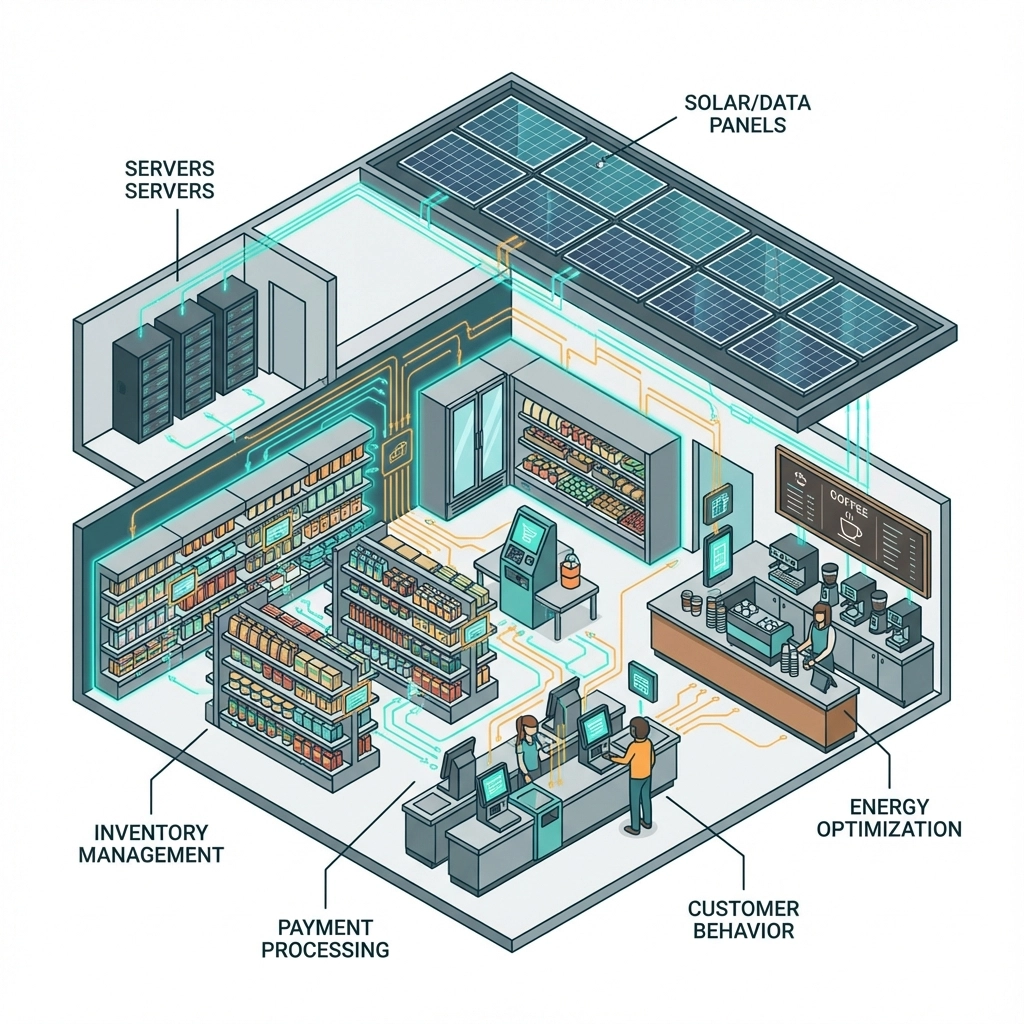
This approach has potential advantages that we think could be game-changing:
Distribution through real relationships. When a family trusts you with their weekly grocery run, when your baristas know their coffee order, when your produce manager helps them pick the best apples : that's the foundation for financial services that actually serve people instead of extracting from them.
Context that matters. Financial tools work better when they understand the reality of how families spend money. When our wallet knows that you buy groceries every Tuesday and Friday, when it understands seasonal spending patterns, when it can predict that back-to-school season means different shopping needs : that context helps us build features that fit your life instead of forcing you to fit our product.
Trust built through transparency. In our stores, you see where your money goes. You see the food, you meet the people, you understand the impact. We believe that transparency can extend to financial services too : clear terms, honest communication, no hidden fees designed to trap you.
This doesn't mean immediate mass adoption : we know we have to prove ourselves one family at a time. But we believe the potential is there to create something fundamentally different from what currently exists in both grocery and financial services.
The AI Insight Platform: Data That Serves Communities
The second major tech component we're building is our AI Insight Platform : and this one might be even more important in the long run.
Here's the vision: anonymized, aggregated data from our operations could provide insights that help entire communities make better decisions about food access, nutrition programs, economic development, and resource allocation.

We're designing this platform to serve several key audiences:
City planners and local government could access dashboards showing food access patterns, nutritional gaps, and economic impact data to help inform policy decisions about zoning, transportation, and social services.
Nonprofits and community organizations could better understand food insecurity patterns, program effectiveness, and resource needs in the areas they serve.
Hospitals and health systems could gain insights into community nutritional patterns that might inform public health initiatives and community wellness programs.
Schools and educational institutions could access data that helps them understand student nutritional needs and the effectiveness of food assistance programs.
Philanthropy and grant-making organizations could make more informed decisions about where and how to invest in food access and community development initiatives.
The key here is our privacy-first approach : all data would be anonymized and aggregated, with strong protections for individual privacy. We're not interested in building surveillance systems or selling personal data. The goal is community insight that helps everyone make better decisions about food access and community development.
We can't make absolute guarantees about data protection : technology evolves, regulations change, best practices improve. But we're committed to building this platform with privacy as a foundational principle, not an afterthought. Full privacy policies and data handling procedures will be developed as the platform comes online.
Why We Think This Matters Now
The intersection of grocery, coffee, financial services, and community data isn't accidental : we believe it's necessary.
Traditional financial services have failed working families. Banks don't want to serve people with smaller accounts, credit scores that don't fit their models, or irregular income patterns. Fintech companies have focused on the wealthy and the young and the tech-savvy, leaving everyone else behind.
Meanwhile, grocery stores have become increasingly corporate, extractive, disconnected from the communities they serve. The corner store relationship : where the owner knew your family, extended credit when times were tight, invested profits back into the neighborhood : that's mostly gone.
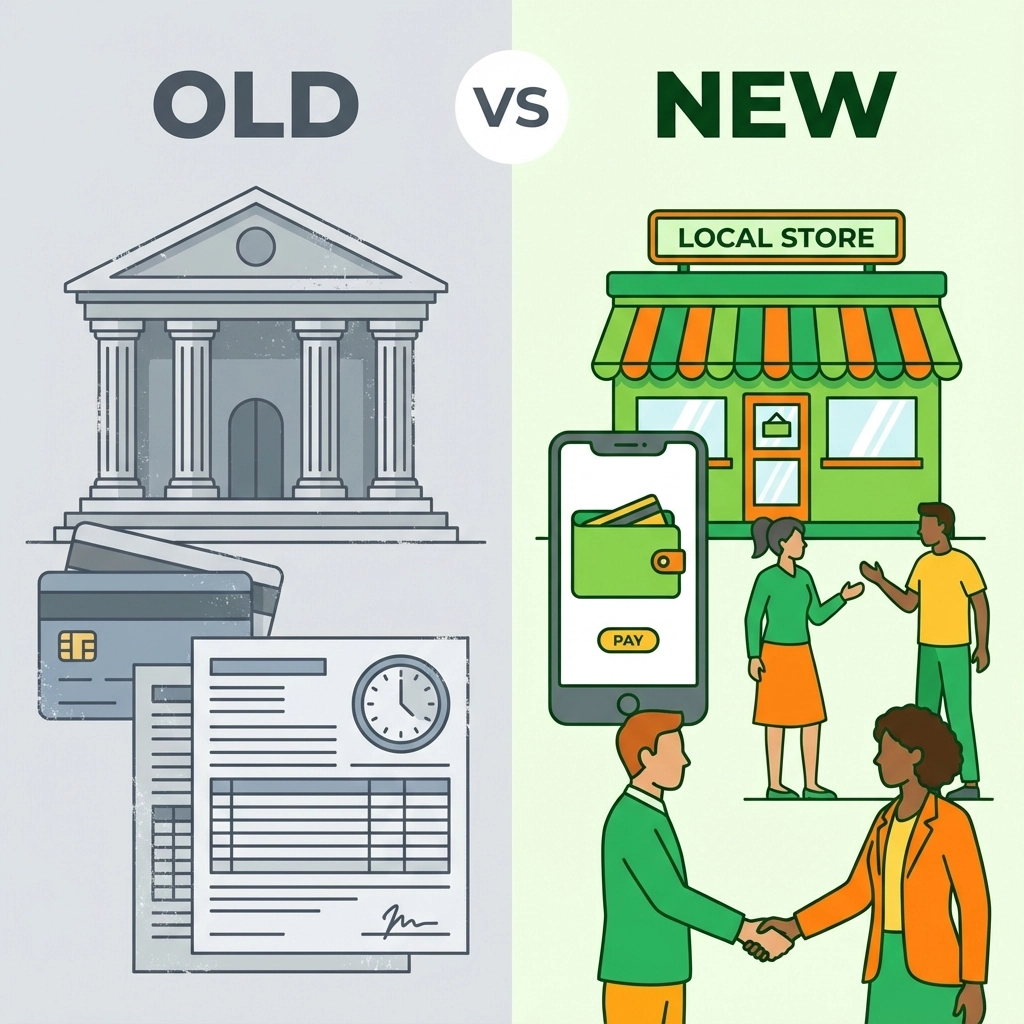
We're building technology that aims to bring some of that back. Financial tools that work for working families. Grocery operations that strengthen communities rather than drain them. Data insights that help communities make better decisions about resource allocation and development priorities.
This is ambitious : maybe too ambitious. We know the technical challenges are significant, the regulatory landscape is complex, and the market dynamics are tough. But we also know that the current system isn't working for most people, and incremental changes aren't enough.
So we're building for transformation, one neighborhood at a time.
How to Join This Build
If this vision resonates with you, you can participate in our growth through our Wefunder campaign. We're offering SAFE (Simple Agreement for Future Equity) terms with a $5M valuation cap, 20% discount to future pricing, pro-rata rights for follow-on investments, and a minimum investment of just $100.
This isn't just an investment : it's a bet on a different kind of food system, a different kind of financial system, and a different kind of community development model.
We're not promising returns or guaranteeing success. Building this kind of integrated system is hard work with uncertain outcomes. But we're committed to the work, and we believe the potential impact justifies the risk.

The Storehouse Wallet and AI Insight Platform are central to our theory of change : that embedding financial services and community intelligence into trusted neighborhood food operations can create value for families, communities, and investors simultaneously.
Whether you invest or not, we're building this. The question is whether you want to be part of making it happen faster and better.
Join us in building technology that serves communities instead of extracting from them. Join us in proving that worker ownership, community roots, and smart technology can create something better than what currently exists.
The future of food, finance, and community development is being built right now. We'd love to build it with you.
This communication is for informational purposes only. No offer or solicitation to buy or sell securities is being made. Investing involves risk, including the risk of loss. For details, visit our official Wefunder campaign page.
Comments