
Building Local Economies: 10 Community-Owned Business Examples That Actually Work
- Carl Johnson
- Dec 20, 2025
- 7 min read
Look, we need to talk about something that's been keeping me up at night, and probably you too if you're paying attention to what's happening in our neighborhoods. We're watching small businesses get crushed by big chains, seeing our dollars flow out of our communities, watching our neighbors struggle while corporate executives get richer. But here's what gives me hope, what actually makes me excited to get out of bed every morning: there are communities all over the world that have figured out how to keep their wealth local, how to build businesses that actually serve their people instead of extracting from them.
And we're not talking about some utopian fantasy here, these are real businesses, profitable businesses, businesses that are thriving because they put community first. Why aren't we talking about these models more? Why aren't we learning from them? Why aren't we building them right here in our own neighborhoods?
What Does Community Ownership Actually Look Like?
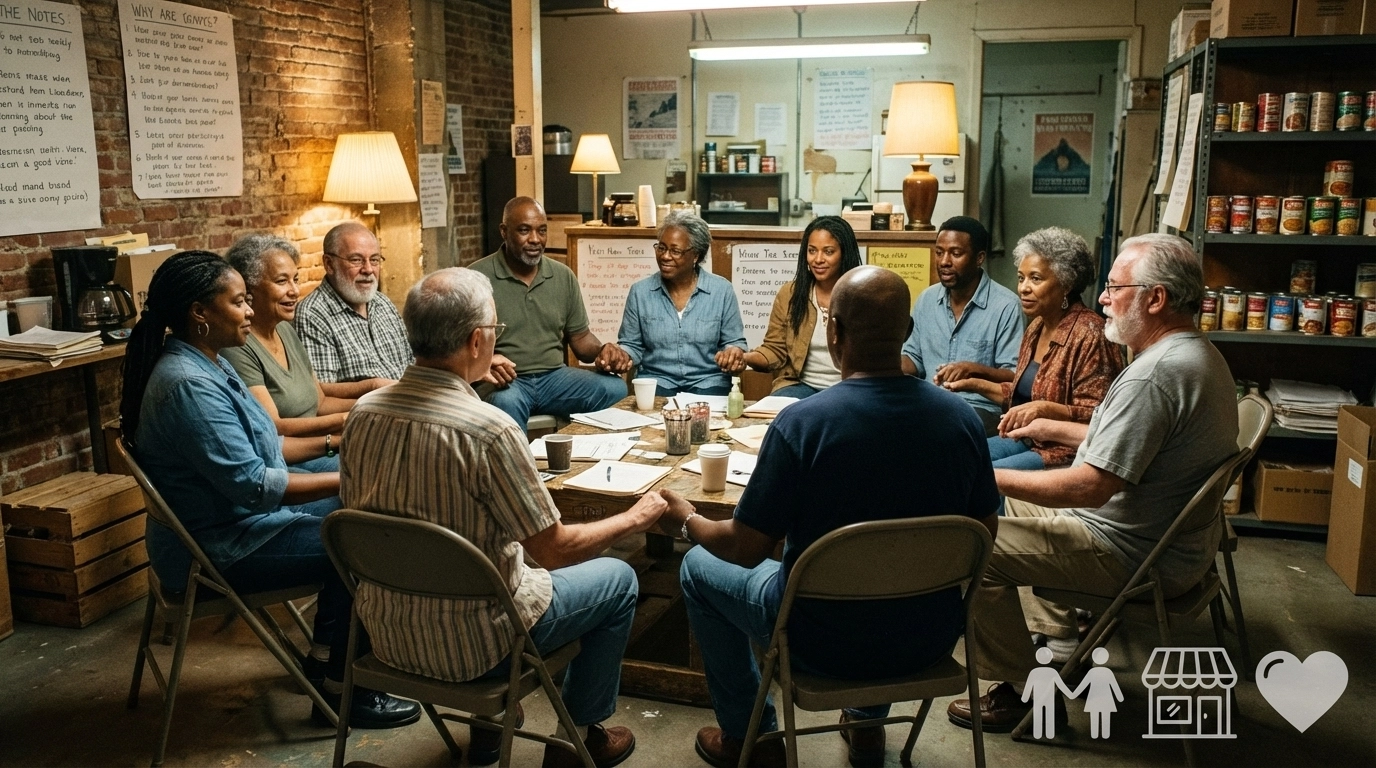
Before we dive into the examples, and trust me, these are going to blow your mind, we need to understand what we mean when we talk about community-owned businesses. These aren't just businesses that happen to be located in a community, they're businesses that are owned by the community, controlled by the community, and designed to benefit the community first.
Sometimes that means the employees own shares in the company, sometimes it means the customers are the owners, sometimes it means the whole neighborhood has a stake in the business. What matters isn't the exact structure, what matters is that the people who are most affected by the business are the ones making the decisions and reaping the benefits.
Think about it this way: when you shop at Storehouse Grocers, you're not just buying groceries, you're investing in your community's future. Every dollar you spend here stays here, creates jobs here, builds wealth here. That's the kind of economic model we need more of, and that's exactly what these ten businesses have figured out how to do...
1. Karish Industries: When Workers Own the Future
Out in California, there's this company called Karish Industries that's been quietly revolutionizing how we think about employee ownership since 2009. They distribute copper wire, aluminum wire, fiber optic cables, not the sexiest business in the world, right? But here's what makes them extraordinary: the workers own the company.
When employees have actual ownership stakes in the business, something magical happens. Suddenly everyone's invested in the success, everyone's thinking long-term, everyone's working toward the same goals because their financial futures are literally tied together. The profits that would normally flow to some distant shareholders? They stay with the people who are actually doing the work.
2. Deep Roots Market: More Than Just a Grocery Store
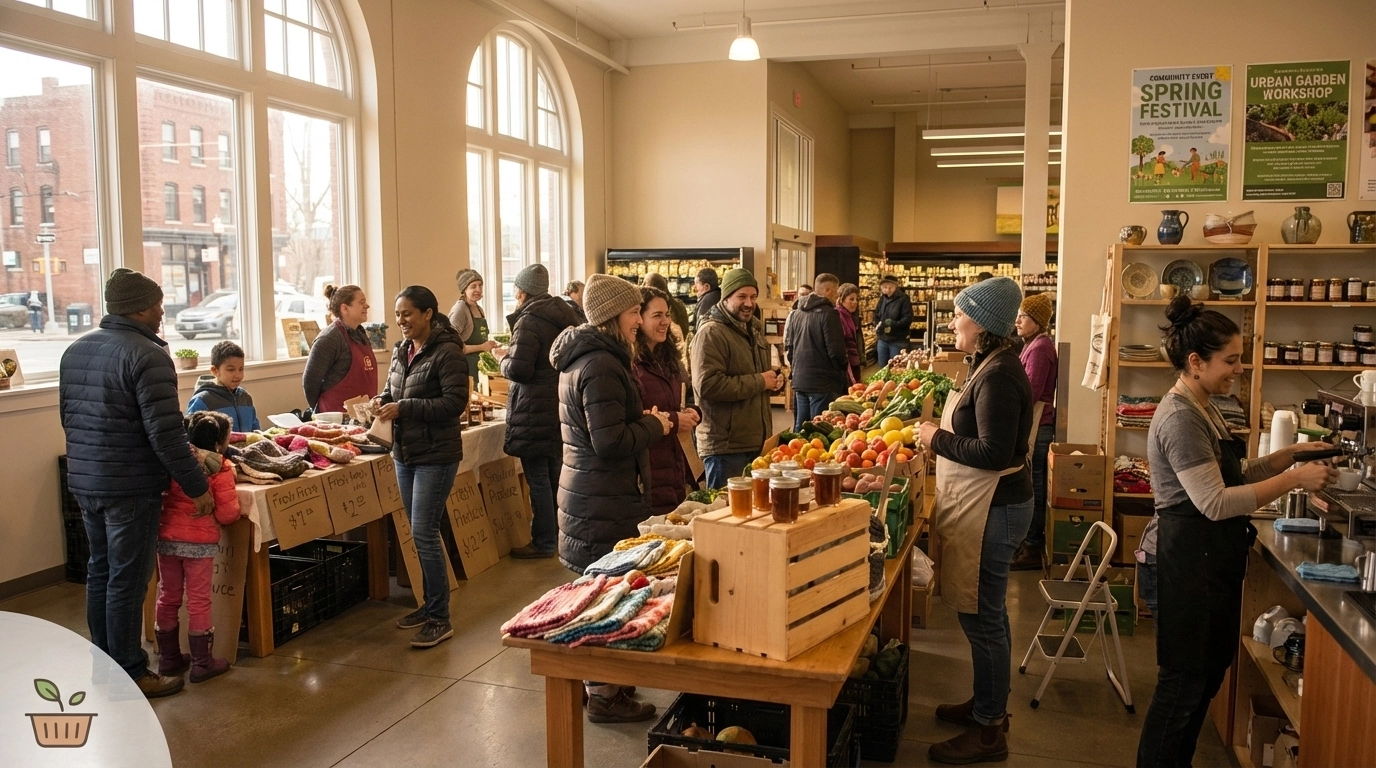
This one hits close to home for us because Deep Roots Market is reimagining what a community grocery store can be, and it's exactly what we're trying to build here at Storehouse Grocers. They don't just sell food, they create space for community connection.
They host in-store markets where local merchants can sell their products, they provide gathering spaces where neighbors can meet and organize, they become the heartbeat of their neighborhood's economic life. When you walk into Deep Roots Market, you're not just shopping, you're participating in community building. That's the vision we're chasing...
3. Teranga Foods: Culture as Economic Engine
Nafy Flatley understood something profound when she started Teranga Foods in San Francisco: food isn't just about sustenance, it's about culture, it's about connection, it's about building bridges between communities. Her Senegalese restaurant doesn't just serve amazing food, it creates cultural exchange, it employs people from her community, it becomes a gathering place for people who might never have connected otherwise.
And here's the beautiful part: the business was nominated as Renaissance Entrepreneurship Center Entrepreneur of the Year. You can be deeply rooted in your cultural identity and be wildly successful at the same time. You don't have to choose between authenticity and profitability.
4. A-Way Express: Turning Stigma into Strength
This courier company in Toronto is doing something revolutionary, they're hiring people with lived experience of mental health challenges and turning what society sees as a liability into a competitive advantage. The founders understood that when you give people who have been marginalized real economic opportunities, when you treat them with dignity and respect, they become your most loyal and motivated employees.
A-Way Express isn't just delivering packages, they're delivering proof that inclusive business models work, that social justice and economic success go hand in hand, that we can build economies that lift everyone up instead of leaving people behind.
5. Hikurangi Enterprises: Indigenous Wisdom Meets Modern Business
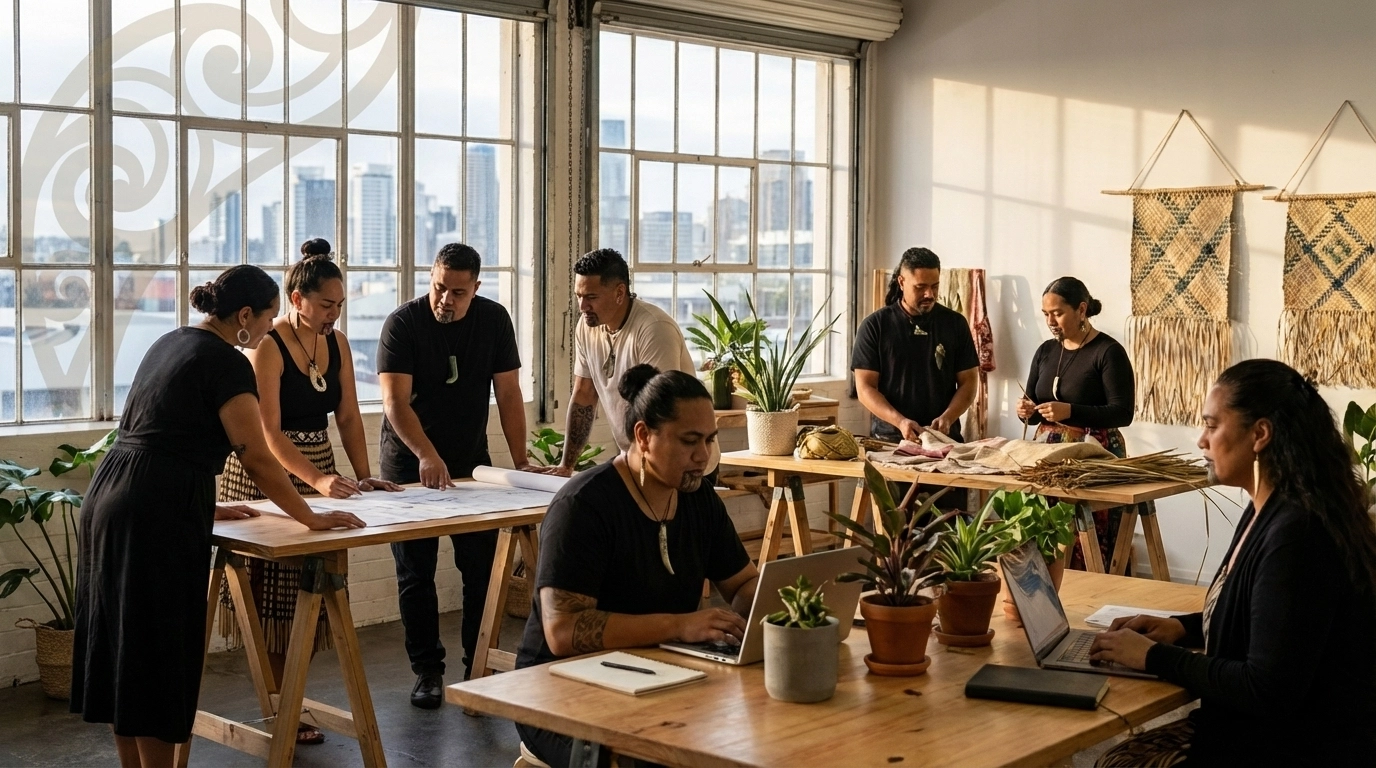
In New Zealand, the Māori community has created Hikurangi Enterprises, which spans everything from sawmilling to medicinal cannabis. But this isn't just about diversification, it's about using traditional knowledge and local resources to build sustainable wealth within the community.
They're not trying to extract resources and ship them somewhere else for processing. They're not trying to copy business models that were designed for other places and other peoples. They're building something that makes sense for their community, their values, their land, their future.
6. Organic Compost Enterprises: Simple Ideas, Powerful Results
Sometimes the most powerful community businesses are the simplest ones. In Bangladesh, families have built businesses selling nutrient-rich fertilizer made from organic compost. With the right organizational support, these families increased their household incomes sevenfold, sevenfold!, while inspiring their neighbors to start similar businesses.
This is what economic development looks like when communities control it: one success creates another success, which creates another success, until you have a whole ecosystem of locally-owned businesses supporting each other and building wealth together.
7. BAPA's Market: Solving Problems from the Inside
Ashley Juhl-Darlington looked around her neighborhood in Los Angeles and saw something missing: there was no place to buy natural, healthy food nearby. Instead of complaining about it or waiting for someone else to solve the problem, she created BAPA's Market.
This is what community-owned business development looks like at its best: people who live in the community, who understand the community's needs because they experience them personally, creating solutions that actually work because they're designed from the inside out, not imposed from the outside in.
8. Hella Nuts: Intersectional Business Building
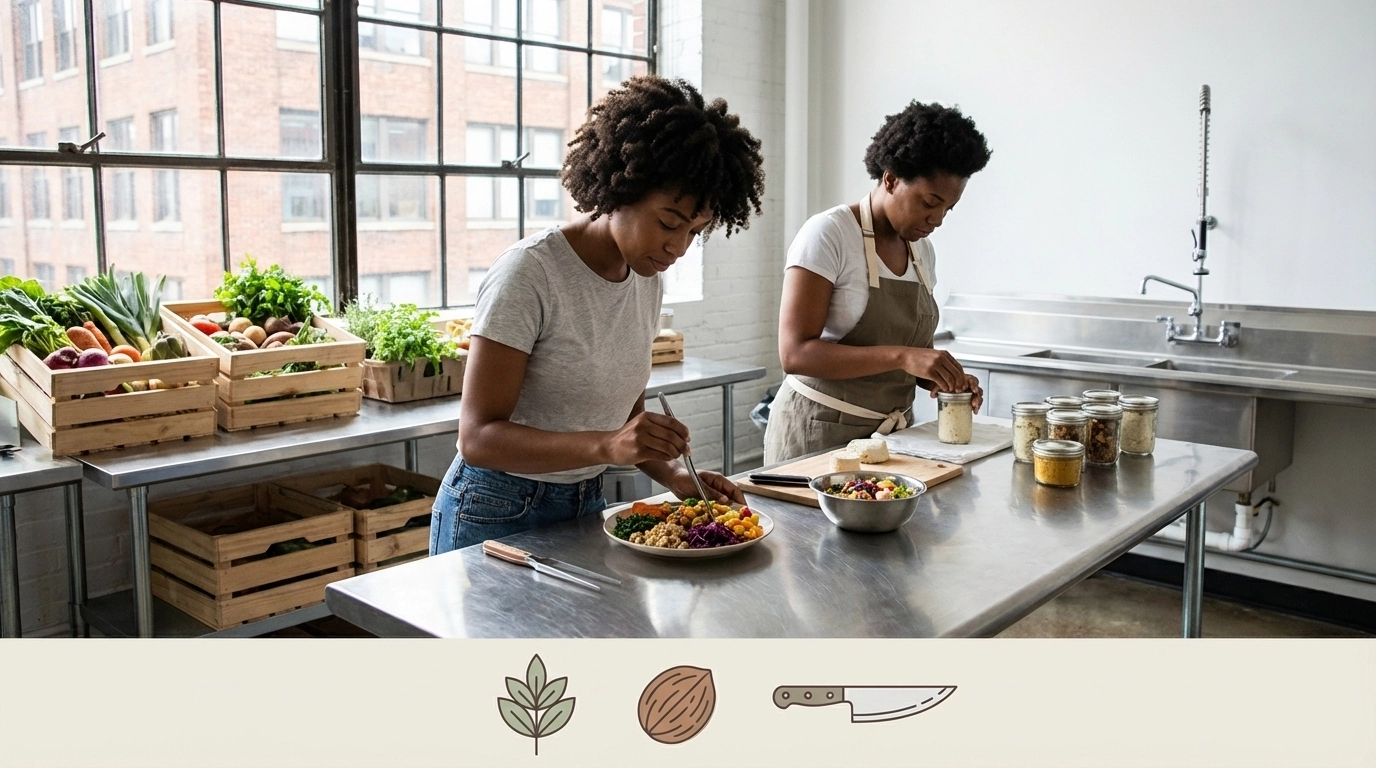
Kami and Mieko Scott didn't just want to create another food business, they wanted to create a Black-owned, women-owned business that would prove you can make incredible vegan products without compromising on quality or values. Hella Nuts uses only natural ingredients, no chemicals, no fillers, no soy.
But here's what's really powerful about their model: they're showing that businesses owned by marginalized communities don't have to be small or limited or apologetic. They can compete with anyone, they can grow, they can expand, they can become major players in their industries while staying true to their values.
9. Sitti: Turning Consumption into Community Building
This conscious lifestyle brand has figured out how to turn every purchase into an act of community support. When you buy from Sitti, you're not just getting products, you're funding computer classes for refugees, English classes, artisan training, all the support services that displaced communities need to build new lives.
They're proving that we don't need charity models that make people feel dependent, we need business models that create real economic opportunities while building the skills and connections people need to thrive long-term.
10. Village Savings and Loan Associations: Financial Democracy in Action
Okay, this one might be the most powerful example of all, and it's so simple that we almost overlook it. Village Savings and Loan Associations are self-managed groups: often led by women: where neighbors save money together, make small loans to each other, and build financial literacy as a community.
No outside capital required. No banks required. No complicated regulations or bureaucracy. Just people coming together to solve their own financial challenges collectively, building wealth and social bonds at the same time.
What Makes These Models Actually Work?
Here's what all these businesses have in common, what makes them sustainable and successful instead of just idealistic dreams: they solve real problems that their communities are experiencing. They keep profits local instead of extracting them. They employ people who might otherwise be excluded from economic opportunities. They embed social missions into their business models so that doing good and making money become the same thing.
And here's the part that gives me the most hope: none of these businesses had to choose between financial success and community impact. They achieved both because they understood that in the long run, businesses that serve their communities are more sustainable, more profitable, more resilient than businesses that extract from their communities.
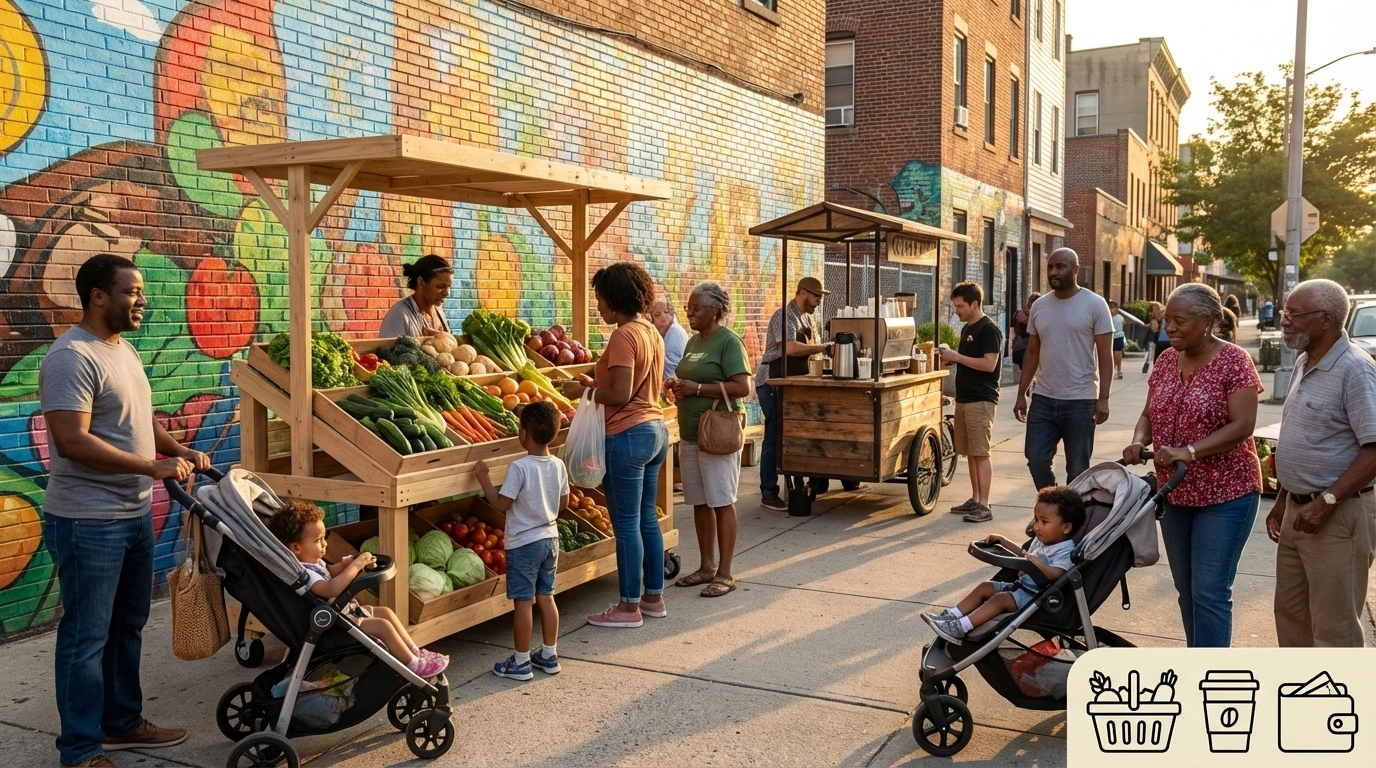
Building This Future Together
Look, this is hard work, building community-owned businesses, changing how our local economy works. We're fighting against systems that were designed to concentrate wealth in the hands of the few, we're trying to prove that different models are possible when most people have never seen them work.
But we're not starting from scratch here: we're building on the shoulders of all these incredible examples, all these communities that have already figured out how to make it work. We're learning from Karish Industries about employee ownership, from Deep Roots Market about community space, from Teranga Foods about cultural authenticity, from A-Way Express about inclusive employment...
At Storehouse Grocers, we're trying to become one of these examples, to show our neighbors that community-owned business isn't just possible, it's profitable, it's powerful, it's the key to building the kind of economy we actually want to live in.
What would it look like if every neighborhood had businesses like these? What would it look like if we kept our wealth local instead of sending it to distant shareholders? What would it look like if everyone in our community had a stake in our collective economic success?
We don't have to wonder: we can build it, one business at a time, one partnership at a time, one decision to shop local at a time. The examples are out there, the models work, the only question is whether we're ready to do the work...